Showing posts with label EURO 2012. Show all posts

Friday, 20 July 2012

Golden era for Spain?

Malaga's best player, Cazorla, is expected to leave this summer
All two La Liga fixtures were announced last week, with the first El Clasico taking place on 7th October at Camp Nou before Madrid host Barcelona on March 3rd.

Real start as slight favourites to defend their title at 4/5 and Barcelona are virtually at odds on as well, they are available to win La Liga at 6/5

Then comes a band of three teams in the betting; Malaga, Valancia and Atletico Madrid. You’ll struggle to find odds under 100/1 on any other team winning La Liga in 2012-2013 with Atletico and Malaga both on 104/1, with Valencia further back at 123/1. (with Betfair)

However none of these teams looks closer to mounting a challenge to the top two; Malaga have transfer listed their best player in Santi Cazorla due to financial issues, Valencia sold their best player to Barca for the princely €13 million and Atletico have yet to beat Real Madrid this century.

Malaga were the subject of a multi-million euro takeover by Qatari investors and despite investing over €50 million into the club they could only finish fourth, 42 points behind winners Real. To exacerbate matters Santi Cazorla and Isco, widely regarded as their two best players, have both been transfer listed in a dispute that relates to unpaid wages.

Valencia lost converted left-winger Jordi Alba for just €13 million, which looks like daylight robbery if United end up paying as much for Leighton Baines, and despite adding Fernando Gago and Sergio Canales in midfield they look short in attack. Roberto Soldado is one of only two recognised strikers in their squad and he was a cast-off from Real Madrid B (Castilla).

Bilbao under Bielsa are the purists favourite, with Guardiola apparently suggesting the Argentinian's name to the Barcelona board when he decided to step down, and are likely to be plundered this summer. The only other contender (baring a Levante miracle like last season) are Madrids working-class neighbours Atletico. If they can keep Falcao and adequately replace the outgoing Diego, then they look a great price to finish ‘best-of-the-rest’ at 7/2. 

International success for Spain has increased the gap between the top two and the rest of la Liga, and most football fans in Spain also support one of the two super-clubs as well as their local side.

The two giants are first and second favourites to lift the Champions League at Wembley next year, and with television revenue not negotiated evenly by all the clubs this financial imbalance shows little sign of abating.


Barcelona and Madrid negotiate their own TV rights separately from the rest of La Liga, so clubs with existing popularity and appeal can essentially charge whatever they like. There is no instant financial reward for pushing and finishing higher up the table like the PL. Without changes to this process Spanish football could soon turn into a tiki-taka monopoly.


EURO 2008 Final - Spanish starting XI (six club teams represented)

Casillas (Madrid)

Ramos (Madrid), Marchena (Valencia), Puyol (Barca), Capdevila (Villereal)

Iniesta (Barca), Xavi (Barca), Senna (Villereal), Fabregas (Arsenal), Silva (Valencia)

Torres (Liverpool)

EURO 2012 Final - Spanish starting XI (three club teams represented)

Casillas (Madrid)

Arbeloa (Madrid), Pique (Barcelona), Ramos (Madrid), Alba (Barca)

Iniesta (Barca), Xavi (Barca), Alonso (Madrid), Busquets (Barca), Fabregas (Barca), Silva (Man City)

The Spanish team that started the Euro 2012 final featured just one player outside of the Barcelona and Real Madrid elite (Man City's Silva), indicating just how much the two giants now dominate Spanish football domestically.

Monday, 2 July 2012

Euro 2012 review

I did say that Spain weren't boring...

Spain made history on Sunday after winning three successive major international competitions and Andreas Iniesta was justifiably bullish in asserting that it was "something that cannot be repeated".

He may well be right and it will take some set of players to eclipse the current squad of Spanish players who have all peaked gloriously in the last four to five years. Other teams will adapt and try to copycat the tiki-taka style, with competition likely to increase among the top football nations making another three tournament run an incredible ask.

Italy did not play badly in Sunday's showpiece event. They created several good chances versus the strongest nation in world football, more than most teams have mustered at Euro 2012, but the standards set by Spain in the final were staggeringly good.

Spain well and truly dismissed the laughable claim that they are a boring side after some breathtaking football that saw them ease to a 4-0 victory. Saving their best performance of the Euro's for the final, the Spanish produced one of the best team performances to ever grace an international tournament and they extended their shut-out in knock-out games to nine games.

The basis of the knock-out stages is to avoid losing, and Spain have now gone 900 minutes without conceding a goal in the latter stages of 2008, 2010 and this year in Poland and Ukraine. Sergio Ramos was a colossus in defence and allowed Xavi and Iniesta to slice open the normally reliable Italian defence.

Spain's win was a joy to behold and the only downside of watching the game was the sight of Andrea Pirlo distraught after the final whistle. For some reason the sight of the Juventus man in tears had more of an effect on me than seeing Stevie G and co sprawled on the floor after England's exit. Worrying times for an England fan, but few would begrudge Pirlo a place in this Spain squad that were again the dominant side at a major tournament.

After the shocking team of the tournament from Garth Crooks (who still gets paid by the BBC), which included Gerrard and Glen Johnson, here is my best XI from Euro 2012.

4-2-3-1

Casillas

Srna, Ramos, Pepe, Alba

Pirlo, Busquets

Moutinho, Xavi, Iniesta

Cassano

Saturday, 30 June 2012

Euro 2012 final and player of the tournament


Spain aim to make history on Sunday as they look to become the first side to win three consecutive international tournaments, but they will be up against a side who frustrated them in a 1-1 draw on day three of Euro 2012.

West Germany reached three consecutive finals in the 70’s, but you sense if Spain win tonight, they will go down as the greatest palette of players to ever play for a national side. This Spain side is not the all conquering side of Euro 2008 though. The efforts of the last four years seem to be catching up with the team (especially the Barcelona players) and their performance against Portugal was one of their least convincing in recent tournaments.

Their passing accuracy was down at (just) 75% against Portugal and Spain look like a long-distance runner desperately trying to make the finishing line. Performances have not yet peaked, but if Spain manage to grind out a 1-0 win it will have been a virtuoso lesson in monopolising possession and dominating games.

I didn’t think I’d say this two months ago after he blazed a penalty into the Allianz Arena to hand Bayern a spot in the Champions League final, but Sergio Ramos has arguably been the standout performer for Spain. Returning to centre-back the 26-year-old has covered for Carlos Puyol with all the gusto and passion that we are used to from the Barcelona captain. Neither player is the most technically proficient, but they will attack the ball and are incredibly committed defenders.

The Panenka penalty that Ramos coolly despatched past Rui Patricio, was sublime and suggested that the defender has spent the last two months practising penalties (or at least watching Pirlo). Spain don’t have a striker, and other than Busquets none of their midfielders has really impressed in Poland and Ukraine. Ramos has been part of a Spain side that has conceded just one goal and has made some superb individual contributions leading the way from the more established Pique.

UEFA and FIFA seem to have an instinctive predisposition to look away from defenders when awarding their player of the tournament, but if any defender deserves the accolade it is Ramos, who in the space of three weeks has matured incredibly, from the young man who already holds the red-card record at Madrid, into an international standard centre back.

In contrast to the burnt out Spanish, Italy look to be finding form at the right time and have produced two sensational displays in the quarters and semi-final. The Juventus inspired defence has been resolute and Andrea Pirlo, flanked excellently by two midfield dynamos De Rossi and Marchisio, has been the best midfielder at the tournament.

Pirlo, Buffon, Barzagli and De Rossi are the only survivors from the World Cup winning squad from 2006 and their play at Euro 2012 has arguably been more expansive then Spain’s. They dominated their two knockout games in midfield and with Cassano and Balotelli on-song up front they will thoroughly challenge the Spanish procession. Spain will need to disrupt the midfield axis that shields Pirlo or his passing ability will pick holes in the Spanish backline.

Andrea Pirlo has embarrassingly only been heralded by a mainstream audience at the age of 33, and the former Inter and AC Milan man has vindicated Prandelli’s decision to base the Italian team around him. Pirlo is one of the most gifted midfielders in European football and the level of his appraisal after the England match indicates the dismissive arrogance of the English media. The lack of European coverage in England and obsessive admiration of Pirlo after the quarter final and semi-final confirms that until a player delivers against England they are immediately dismissed.

Pundits are bemoaning the absence of an ‘English’ Pirlo after now having it thrust in front of them, but the reality is that Pirlo has been winning titles and World Cups for years previously without this level of deification.

Spain beat the Italians 4-2 on penalties in a gripping quarter final at Euro 2008, in what proved a watershed moment for the Spanish national team. Despite playing excellently in previous tournaments they had come un-stuck and choked in the knockout phases and their gritty elimination of the Italian's paved the way for their first major title since 1964 and the start of their current run. Should La Roja win tomorrow it will be a fitting and appropriate opponent for Spain, as they return full circle to the Italians, looking to make history as the greatest assembly of players in football history. 

Tuesday, 26 June 2012

'Boring' Spain march on

Spain face Portugal in the first semi-final of Euro 2012 and the build-up has been reduced to whether Ronaldo can beat Spain single handedly and whether Spain would change their approach after being labelled 'boring'.

Both statements are founded in ridiculous hyperbole and have reduced the amount of interesting journalism undertaken in the (English) mainstream press. CR7 has had quite a good tournament; scoring in five successive tournaments for Portugal isn't bad, but to suggest that the rest of the Portugal side are a side show waiting for Ronaldo to rescue them is to ignore the depth of experience in the side.

Other than Miguel Veloso, the indifferent Raul Merieles and the absence of a out-and-out striker, Portugal have one of the form teams in the tournament and they have an enormous amount of continental experience. Pepe and Bruno Alves have looked imperious at the back, while the two full-backs are amongst the most dangerous in Europe. Joao Moutinho has been superb and with two seasons under his belt at Porto looks like fulfilling his early promise. Nani came to Poland and Ukraine on the back of a poor league season but has impressed thus far.

Ronaldo has found some form at Euro 2012, taking 30 shots will help, but to suggest that Portugal are a weak team without him is foolish. The have shown enough to indicate that they will give Spain their toughest test at Euro 2012 and the Portuguese looked close to matching Germany, despite showing them too much respect in the 1-0 defeat.

After posting eight goals in their first four games, only behind Germany with nine, people seem to have got it in for Spain and the 'boring' tika-taka football that they've produced this tournament. After conceding just one goal in games against Italy, Croatia and France the Spanish squad have genuinely had to answer questions about their playing style and whether they would change it.

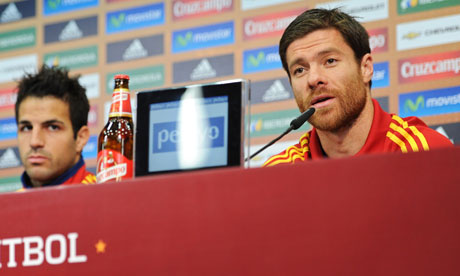
That the whole world was fawning over tika-tak football two (and four) years ago has been conveniently forgotten, and Xabi Alonso and Andreas Iniesta have had to declare in press-conferences that Spain would be sticking to their principles and passing philosophy.

Guillem Balague alluded to the extraordinary scrutiny and pressure that Spain are under and it seems to be fashionable to pick holes in the Spanish at present. The Chelsea Champions League win falsely reinforced a notion that playing ultra defensively will regularly defeat a passing machine and this has contributed to a footballing culture more happy to critique possession football.

Chelsea's win was down to some extraordinary luck in at least three of their European ties and was supposed to be based on the model that Inter perfected in 2010. The main difference being that Inter produced a masterclass in defending, so good it is unlikely to be matched, whereas Chelsea rode their luck and thumped it up to man-mountain Drogba. To defend that well, to a man, and eliminate Barcelona will happen 1 in 10 matches and Inter also rode their luck regarding Bojan's legitimate goal.

To contend that Spain need to change their approach is an absurd statement and from where I'm sitting their football this tournament has been superb. I can count two clear chances that they have conceded in four whole matches; the Di Natale goal and Rakitic chance v Croatia. Both were created on the counter and required two pieces of excellent individual skill, a step over and perfect pass from Pirlo and a mazy run and outside of the boot cross from Modric to come close to breaking Spain down.

As part of tika-taka football Spain will monopolise the ball and unless they come up against a foolhardy side, they will have to break down three walls of opposition players, quite a challenge. By keeping the ball for longer and playing less openly Spain are protecting Sergio Ramos and Gerrard Pique, which is a raw partnership and less stable than a Pique and Puyol or Puyol and Marchena.

The Spanish have now gone eight knock-out games without conceding a goal, which is normally a great way of progressing at competitions. Spain are not here to play entertaining football and put on a show for the public. They come to Poland and Ukraine looking to be the first side to win three successive tournaments and based on their form and resilient displays so far, look favourites to do that.

Monday, 25 June 2012

England once again find their level


England were left to rue their inaccuracy on penalties as they suffered a 4-2 penalty defeat to Italy after 120 goalless minutes in Kiev. Statistics never tell the full story but with a possession of 34%, joint with the damage Greece inflicted on Germany, and an average of 2.75 shots on target a game it is easy to see why England failed to trouble many teams.

That it took a penalty shoot-out to finally finish England off was indicative of some profligate finishing from Italy and the dogged determination of the England players. Sadly this seems the only trait that English players can excel at in international competition, and bravery and commitment are no longer enough to win a major tournament.

Roy Hodgson has come in and in the space of just ten training sessions done all that he can; make England harder to beat. Hodgson can do little about the scarcity of players brave enough to demand possession of the ball and was denied the presence of one who can, Jack Wilshire, through injury. But to suggest that Wilshire in midfield would have seen us dominating other teams in possession stakes is wildly optimistic and glosses over the deeper issues at hand.

The £750 million invested on Wembley Stadium still has a long way to go before it repays its outlay and the FA must be wishing that more of that money was invested in youth coaching. Other than Jack Wilshire there is a dearth of ball friendly midfielders in England set-ups and the FA are now several years behind other nations in their development programmes.

Germany completely overhauled their youth development eight years ago under Jurgen Klinsmann and Joachim Low, with the tacit approval of the Bundesliga, and their crop of midfielders at Euro 2012 reflects their philosophy. Until the Premier League agrees to a reduction of power and influence in England the FA and national set-up will continue to struggle. There needs to be a readdress towards the FA and the national side, but with the rampant financial success of the Premier League this looks increasingly unlikely.

England could quite easily have lost all four of their games at Euro 2012 and only dictated the majority of the play in one of them, against Sweden. There was no goal-line injustice or red card to rage against or hide behind this tournament. England were given a football lesson by the Italians and a revaluation of how England approach football will need to start soon. Past tournaments have provided the nation with a scapegoat or a reason to put off any major change. England’s meek exit this year may finally see an overhaul of a nation still clinging to 1966 as they finally move on. 

Wednesday, 2 May 2012

Deconstruction of the 'people's choice'


England ended months of doubt on Monday as Roy Hodgson was confirmed as the new England manager on a four year deal. 

Instead of backing England's new man, the mainstream media seem to have developed a complex because Hodgson is not Harry Redknapp, dubbed the 'people’s choice'.

When Capello departed, in early February, Redknapp was immediately assigned the role as favourite to replace the Italian, despite little evidence to support his elevation. Redknapp was cleared of tax evasion on the same day as Capello's exit, which sparked debate that these things were 'meant to be'. Now Redknapp was out of court the England job was his to stroll into. 

A comparison of the respective managerial records of the two men is telling:

Redknapp – Won: 518, Drawn: 317, lost: 437, Win percentage: 40.76. League titles: 0, FA Cup Wins: 1, CL Quarter Finals: 1, Premier League Manager of the Year 2009/10
Hodgson – Won: 408, Drawn: 283, lost: 257, Win percentage: 43.04. League titles: 5, Europa League Finals: 1, UEFA Cup Finals: 1, LMA Manager of the Year 2010


The 64-year-old Hodgson has been managing since retiring at 28 and his coaching experience has taken him off to Scandinavia, Internazionale, the Premier League, Finland, the UAE before returning to the Premier League, succeeding at Fulham and West Brom.
Redknapp might boast an FA Cup win with Portsmouth in 2008, but in total the former West Ham player totals more relegations than promotions. The FA Cup victory with Portsmouth is an inflated prize; in winning in 2008 Redknapp spent way above the typical means at Portsmouth and the club entered administration two years later.
The 65-year-old is not solely to blame, but the signing of John Utaka on £50,000 a week was disastrous, with the Nigerian pace-merchant only leaving in January 2011 after scoring 10 in 90.
Both men have almost three decades of managerial experience and are only just gaining wider recognition. Redknapp worked the lower football leagues for years, while Roy learnt his trade in Sweden winning several titles.

In terms of recent success the obvious comparison is Redknapp making it to the last eight of the Champions League with Spurs or Hodgson reaching the Europa League final with Fulham.
Both were impressive, but for a squad of Fulham’s stature and lack of substantial investment, to go all the way to the final in 2009 is an incredible achievement, surpassing getting a very good squad of players to the Champions League quarters.
Hodgson also boast more than 80 games at international level. He guided the Swiss to third place in FIFA’s world rankings in 1994 and came three points from taking Finland to their first ever major competition in 2008.
He was head-hunted to be a UEFA’s chief scout in 1996, and in this role produces dossiers on all the major club sides and national associations in European football, experience that could prove vital this summer.
Compare this with Harry Redknapp’s continental experience and all the media favourite can point to is one game in Europe with Portsmouth and one season in the Champions League with Spurs.
To compare the two is a complete mis-match and begs the question, why was Redknapp so widely tipped as favourite for the head role? What does Redknapp count as an advantage over Hodgson? What evidence is there to confer Redknapp as the 'people's choice'?
The lack of evidence to advance Redknapp as an international manager was glossed over by journalists and former players over the last few weeks, with most resorting to that assertion that Redknapp is a good man-manager.
That these qualities were even deemed important for the next England manager suggests why England are almost decades behind teams on the continent and in the Americas.
Hodgson completely surpasses Redknapp technically; his training drills are infamous for their complexity and duration. By contrast, Redknapp leaves training exercises to a coaching team of Joe Jordan and Kevin Bond and once famously told new-signing Roman Pavlyuchenko to “run around”.
Despite these deficiencies Redknapp was dubbed the ‘people’s favourite’ by the majority of the media and their indignation at being proved wrong by the FA exploded on Monday as Hodgson was finally confirmed.
I could find only one journalist who had positive thoughts on Hodgson’s appointment, from the Telegraph’s Henry Winter, with the rest keen to express outrage that their pal Redknapp was impossibly overlooked.
Redknapp has a reputation for being a good talker, his press conferences and Range Rover interviews would always provide journalists with a ready-made sound bite. He clearly had a closer relationship with the media than Hodgson who only has six years’ experience as a manager in England.
Hodgson has had to endure a torrent of negative articles about his style of play, his lack of man-management (despite none of these people having worked under him) and the pieces conclude with his disappointing six months in charge at Liverpool.
To condemn a man’s entire career based on one six month spell is at best simplistic and at worst a falsehood. Hodgson has tremendous experience and prestige around the footballing world, which is not replicated among the British press

The assumption that Harry Redknapp could come in and make the same old group of players start knocking it about like Real Madrid is a wild presumption. Tottenham played good football this season because of the players they have, not because of Redknapp. 
From a completely rational decision process it is clear that England under Hodgson would be the greatest fit. Hodgson has international experience, gets the best out of his players, is tactically astute and is a great choice to develop the St George's Park project. Redknapp is clearly a good manager, but his acclamation as the 'people's choice' was unwarranted and is to gloss over the superior candidate; one who has won over the Football Association, if not the media.

Sunday, 26 February 2012

How to look good in England

England have announced the latest incarnation of the national teams home shirt which will be modelled by Stuart Pearce's side against the Netherlands on Wednesday evening.

England Home Kit for EURO 2012
The shirt was hastily announced this week through a blog on the Umbro website, to prevent Joey Barton stealing their thunder by posting a picture of the latest design on Twitter. Comprising just shades of white and red, the shirt was apparently "inspired by the St George's Flag, Tailored by Umbro." The reaction has been underwhelming, with more being made on the FA's decision to launch another kit for a RRP of £55 when the previous home kit was only used during qualification matches to get to this summers tournamen.

Rather than shelling out on the new kit I thought it would make more sense to have a look at past iterations, which frankly have a bit more to them than a plain white shirt with some red piping.

Home Kit for 2002 World Cup
This 2002 shirt was the first England strip that I owned and as such I still hold it in high regard. Despite being over 10 years old it still fits perfectly and with its off-centre red stripe and blue detailing on the edges it still looks the part.

Get one now on eBay for : £5-10

Away Shirt 1998 World Cup
If you can ignore the shiny plastic sheen coming off this shirt then there is a pretty good looking piece of kit. The collar and design are classic 90's fair but this shirt also has a tasteful St George's flag embossed in the red front panel. With far more character than recent all red shirts this 1998 top is a steal at less than a tenner.

On eBay for around: £5-10

2012 EURO Away Shirt
Now if you don't want to go too retro and will recoil in horror at the nicks and pulls on older shirts then I think the current away shirt is a fairly good alternative to the home one. Made from the same pyjama type material as the old home kit, this outing is fairly straight-forward. It works though. The dark blue and baby-blue collar is a new colour scheme, one that I think is a refreshing change (unlike the team).

Still quite pricey: £40 on jjb and sportdirect

England Third Kit: 1990-1992
Saving the best until last is this third kit, that was criminally only used in a single qualifying game for the 1992 European Championship. This kit has all the flair of a James May shirt, a world away from the current tops. England shirts tend to be quite bland so this pop-art design is one of the most distinctive and interesting I've seen. As you'd expect for such a rare and now old shirt it is expensive starting at around £40.

classicfootballshirts.co.uk - £40-70

Friday, 3 February 2012

Parker for Poland and Ukraine


The Football Association acted today to remove the England captaincy from John Terry, in a move which has deliberately undercut Fabio Capello. Terry, who again decided not to resign the armband, did appear to have the backing of the England manager but Chelsea’s wish for the court case to be played out after the European Championship was a stretch of faith too far for FA executives.

His second dismissal from the role leaves Capello in a quandary, as he must again appoint a new captain in time for this summer despite them well knowing that they were second choice. Rio Ferdinand has already ruled himself out of the running, citing his experience of having the captaincy stripped away from him by Capello and alluding to a serious breakdown in relations with the Italian.


Following Capello’s own logic and painful experience from South Africa, the third in line appears to be Liverpool skipper, Steven Gerrard. Whether Gerrard, who is flung the armband when England drift from one crisis to another, would want the cast-off honour remains questionable, but like Ferdinand before him his recent injury record might make the pragmatic Capello think outside of his 30 plus box.

Frank Lampard and Gareth Barry have captained their country before but are not guaranteed a place in England’s starting XI, even more so if current form is taken into consideration. Rooney has game-time leading his country but his petulance and suspension for the first two games in Ukraine casts doubt on how he would handle such a role.

As Capello enters into the final six months of his England career the temptation for the 65 year old would be to play safe and appoint one of the aforementioned names, with experience in captaining their country. However, to many a more appealing prospect would be the introduction of a younger talent, one who could lead England for the next ten years. A younger generation free from the disappointment and pressure of the so called ‘golden generation’ and their flop at the last two World Cups.

Names like Jack Wilshire, Phil Jones and Joe Hart will be thrown loosely into the hat, although at present only Joe Hart is an established England international. Gary Speed was reaping the benefits of naming then 20 year old Aaron Ramsey as permanent captain before his untimely death, and England would do well to learn from this. England need to begin blooding a new generation of players who are comfortable with the ball at their feet and not just suited to the frenetic pace of the Premier League.

Having said that one player who must be considered, even if it is solely to lead the side to Poland and Ukraine, is Scott Parker. Alongside Michael Carrick, Parker has been the standout English central midfielder this season and his role in Harry Redknapp’s Tottenham Hotspur side has been the difference between them challenging for a Champions League berth and challenging for the league.

To describe him as a tough-tackling holding player is to do Parker a disservice. The former West Ham captain through a series of spectacular goals, Churchillian half-time speech’s and box-to-box raiding which saw him named FWA player of the year for 2010-2011. In his criminally few appearances for England he has managed to stake his place in Capello’s thoughts and now looks a guaranteed starter, injury permitting.

Although at 31 he may only have two major tournaments left in him, his sense of throwback to years gone by (just watch him do an interview) and a passion to play for his country means that he deserves a shot on the grandest of stages. He already seems a lynchpin in England’s new three man midfield and what better way to utilise his talent then to send a 23 man squad to the European Championships this summer, then with Scott Parker at the helm.

Sunday, 5 June 2011

Sorry and tired - same old excuses from Capello and England

Fabio Capello was back to his hypocritical best yesterday, blaming tiredness for yet another poor England performance at Wembley, a match where in all truth England were lucky to take a point with which to mull over this summer.

Capello went some way to point out how the players had been allowed several days holiday before preparing for yesterdays game and how he had seen his players looking fresh, despite having just come off the back of a gruelling league season. Such was this new found confidence before the game, England's head coach suggested that such a move would also be proposed before next years European Championships, if England make it that far.

Whether England will be competing in the Ukraine and Poland next year does still remain in their hands, following Montenegro's failure to take advantage of England's slip up, but England's fortunes in qualifying still pale in comparison to the rest of Europe. The Netherlands, Spain and Germany have continued where they left off from South Africa by winning every competitive game before them.

By contrast, England and Capello seem to have learnt little from last years debacle. Although much of the deadwood from England's squad last summer have been omitted, the ageing spine of the team remains the same. Rio Ferdinand and Frank Lampard looked way off the pace yesterday, with none of England's 'first choice' team distinguishing themselves. Almost laughably two of the players who did emerge with some credit, Leighton Baines and Ashley Young, started the game on the bench and weren't even part of the 23 that travelled to the World Cup last year.

Along with Scott Parker and Jack Wilshire these fresh faces in the England camp are certainly an improvement but their inclusion like Capello's belated switch away from the his stagnant 4-4-2 formation seems to be an act of desperation rather than acumen. The inclusion of James Milner and Theo Walcott over Young in the starting line-up proved to be huge mistakes, with neither doing much to justify their inclusion. These are basic errors and the inability to select players who are in form is unjustifiable for a man earning £6 million a year.

Despite allegedly being reassured by Capello after the game, Darren Bent's two misses will probably ensure he is back to a berth on the bench when Rooney and Carroll are available for the next round of matches. The fickle Capello seems not to look on to kindly if a emerging player fails to deliver in just one match: just ask Jordan Henderson who seems likely to remain on one full cap for the foreseeable future.

Switzerland despite only accumulating five points in Group G, looked far more comfortable in possession yesterday and England's Premier League stars were given a lesson in movement and possession by the less fancied Swiss. Their teenage prodigy Xherdan Shaqiri excelled, as did Jack Wilshire, but the confidence and ambition of a young Swiss team was far superior to the lack of creativity shown by yesterdays England side.

The first half performance did indicate that the team was playing on empty and were slightly burnt out, but this makes a mockery of Capello's pre-match claim that the players seemed refreshed. His struggle to grasp the English language means that whatever he claims in a press conference can not be taken at face value. This failure in communication and the ease with which Capello seeks to pass the blame do not bode well for a national side short on confidence and bereft of creativity.

Thursday, 2 June 2011

England game and Bent slip in under the radar

Given the amount of attention that FIFA and Zurich have received from the English media over the last seven days, you'd be excused for forgetting that this Saturday England face Switzerland in a crucial qualifying match.

England remain top of Group G for qualification to the European Championships next year, only on goal difference from a determined Montenegro side, who came within a crossbar of claiming all three points when the sides met in October. Three points this weekend will see England remain in pole position over the summer and hopefully restore some normality to a week which has seen FIFA and the world game reduced to a farcical state.

A raft of withdrawals from the initial 23 man squad, and Capello's decision not to call up replacements means that a concise team will be asked to overcome Switzerland, on paper the strongest team in Group G.

Already without two of England's most influential players in Rooney and Gerrard, through suspension and injury respectively, Capello has a squad comprising only three recognised strikers. Bobby Zamora, who has only just returned from a lengthy lay-off, Peter Crouch, who has hardly been prolific this campaign, and Darren Bent, the £24 million man at Aston Villa.

Bent appears to be in favour with Capello, getting the nod ahead of other forwards for the Wales game this March and putting in a superb performance which was capped with a goal: finishing a slick move which was assisted by his club team-mate, Ashley Young.

Bent's arrival at Villa in January and his already impressive link up with Young helped ease Houllier's men away from the bottom reaches of the table in the Premier League and this interplay looks to have carried on to international level. The movement that Bent offers to any team proves invaluable, and his runs off the last defender will cause problems for even the most experienced defenders, especially so with talented play-makers in a midfield.

After an excellent season and Capello's belated switch to a 4-3-3, Young finally seems to have established himself within the England squad. Young failed to even make the initial 30 man squad for the World Cup, losing out to midfielders Joe Cole and Shaun Wright-Phillips, who have failed to even make the bench at times for their clubs this season, so his emergence on the international scene marks a remarkable turnaround.

Young and Bent would have watched from home last summer, as England toiled to elimination in the round of 16, but now look like nailed on starters for the game against the Swiss this Saturday. The pair, much like Saturday's game, itself have come into contention with little attention and fuss; although if England do finally get one over on the Swiss on the pitch, there will be plenty of media attention.