Sunday, 28 October 2012

Ajax to the future

Ajax rolled back the years with their vintage display against Manchester City in the Champions League, and with a starting XI that boasted seven academy graduates the future looks bright for the four-time European Cup winners.

Frank De Boer's side had an average age of just 24.36 years and boasted little European experience, but tore apart the defending Premier League champions who lurch from one poor showing to another. Mancini might be the domestic cup specialist, winning the Coppa Italia with three clubs as a manager and the FA Cup with City, but his performances in Europe have never lived up to billing.

Despite winning three straight scudettos with Internazionale in 2006, 2007 and 2008, Mancini was sacked by the hard to please Massimo Moratti after failing to impress in Europe and the same infliction seems to hinder Manchester City. They have been slow starters domestically and against the elite of Europe these defensive errors will be punished, as Ajax discovered and who grew in confidence before controlling the game.

Despite the excellent showing, it is unlikely that Ajax will escape Group D, but De Boer and his assistant Dennis Bergkamp will have been delighted with the way their young team out-manoeuvred Manchester City. Manchester City were poor last week and offered little in attack, but against Dortmund and Real, the Dutch champions defence was harshly exposed. Hardly a surprise, when you look at the calibre of defenders who have left the Amsterdam Arean in the last three years; Vermaelen, Vertonghen, Van der Wiel and Anita.

Ajax have retained their offensive-minded players for the last two seasons; Christian Eriksen pulling the strings along with nationalised Dutchman, and captain at just 23, Siem De Jong. The forward interchanged position with Ryan Babel constantly and slammed home the equaliser for Ajax in some style. However, if Ajax continue to flounder in the group stages without progressing to the knock-outs they will be unable to fend of preying clubs who take a shine to their young stars.

The Dutch giants have been unlucky to draw Real Madrid in their group two years running, and wind up in this years 'group of death', but young stars like Eriksen and De Jong are likely to leave for a stronger league in the near future. The Bosman ruling decimated the Louis Van Gaal drilled Champions League winning side of 1994-95 and the growing financial excesses of the Premier League and the big two in Spain will continue to threaten Ajax.
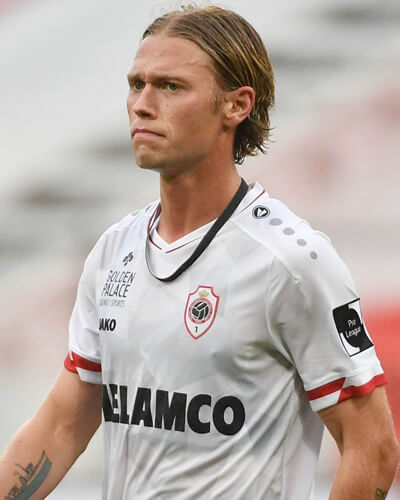
Eriksen has been on the radar of European heavyweights for three years, and despite two failed showings for Denmark on the international stage he is the most attractive prospect in the current set-up. The Dane was actually on trial at Chelsea as a 15-year-old, eventually electing to further his career in the Netherlands but the next young Danish star making headlines for Ajax is 18-year-old, Viktor Fischer.

Fischer burst onto the scene as a result of a hat-trick which eliminated Liverpool from the inaugural NextGen Series, as Ajax made it to the final of the new tournament designed to give under-19s an early taste of continental competition. He finished as top-scorer with nine goals en route to the final, where Ajax were beaten by an Inter Milan side, led by current boss Andrea Stramaccioni, and has started equally well in this years competition, scoring four of the 10 goals that Ajax have smashed home in their first two games.

The teen is more of an out-and-out finisher than his compatriot, Eriksen, and made his first ever appearance for the full team in the 3-3 draw with Hercules last weekend. Manchester United were linked with a £5 million bid for the starlet last summer and if his goal-scoring form continues this season he could find himself negotiating with even more clubs.

A product of the De Toemkest academy, Fischer is yet to make his full debut for the Danish national team, but a record of 20 goals from 30 under-17 games suggest his breakthrough will come soon. De Toemkest literally translates as the future, in Dutch and it is easy to see why it is held in such high regard around the world.

Ajax are enshrined to the 4-3-3 formation and much like La Masia, Toemkest preaches a particular style of football; somewhere between 'Total Football' and tika-taka. General manager, David Endt, reveals the philosophy in place, "We're not developing for other clubs; we're developing for ourselves. This is football how we want to play it."

Statistics have become a integral part football coaching in the last decade and Ajax are ahead of their time with their latest innovation - the miCoach performance centre, adjacent to De Toemkest. Resembling an oversized golf ball, the centre contains pressure plates, high-definition cameras for biomechanical analysis of technique and an artificial pitch to replicate the Amsterdam Arena.

Personality and psychology are also analysed in detail, with head of sports science, Edwin Goedhart, explaining that: "talent is 80%... training is 20%. The rest is what we can add [mental coaching/analysis]. Even if it's only 1% improvement, spread over a team that is 11%."

All students at De Toemkest undertake neuropsychological testing and this is used to quantify why certain players make better in-game decisions than others. Goedhart raises a fascinating point about how these tests could "go a long way to developing more natural Dutch leaders, arguably the one failing of the Ajax system" and to a greater extent the national team.

Saturday, 20 October 2012

Ferguson misses the point

Sir Alex Ferguson doesn't misread situations very often. 25 years of perpetual success in Manchester and 12 titles indicate this. But his handling of Rio Ferdinand's Kick It Out boycott perhaps reveal a fallibility of the 70 year old.

This weekend player ratings in the Premier League were pushed to one side as interest focused on whether players would pull on a particular top in warm ups. Ferdinand was the lone United player to go incognito, but he was joined by Jason Roberts and two other Reading players, two from West Ham, and the entire contingent from the Liberty stadium.

Michael Vorm was one of the Swansea players who collectively shunned the t-shirt and he calmly and fairly explained why Swansea chose not to wear them. "Everyone expects the governing bodies to do more... They really have to do something and not just say something on a T-shirt."

Whether Ferguson objected to Ferdinand not backing the campaign or rather took affront to his disregard of his instructions is unclear. Ferguson was highly critical when informed about Robert's planned abstention on Friday and it would follow that the same stretch of thought applied to his own players.

Ferguson seemed to have missed the point on Friday, describing Robert's as "a stray sheep" and insisting that everyone should back the campaign. His comments suggested that dissent was a mistake, but without individuals who are prepared to challenge the existing hegemony progress will slow in all aspects of society, of which racial prejudices are one facet.

Alex Ferguson is clearly his own man and rules United with an iron fist. His comments over the weekend bely his trade union and socialist background and instead seem like totalitarian rhetoric. Why should any player be forced to wear a largely irreverent T-shirt bearing a slogan which they feel doesn't fairly represent them?

The FA, who are happy to spend £20 million soliciting favour from FIFA in the failed World Cup bid, and de facto UEFA, contribute just £300,000 to the organisation tasked with eradicating all discrimination in the game. It's a paltry sum and the shirts that hogged headlines are not subsidised by the clubs; KIO pay for the shirts to be printed and even pay for them to be sent out around the country.

The plight of the organisation is one of key aspects to come from this ill timed Kick It Out week and in fairness the player boycotts have attracted publicity that the own organisation could only dream off.

For refusing to wear a T-shirt which is symbolic of a culture that has failed to adequately defend his brother, Ferdinand is reportedly looking at a two week fine. Coupled with his £40,000 fine from the FA for a retweet, the United defender could end up paying more in fines than John Terry.

Chelsea have kept their own punishment in house and given that any fine greater than two weeks wages needs to be declared to the PFA (it hasn't) the two time former England skipper has got away extremely lightly.

The boycotts of Kick It Out are not necessarily aimed at that specific organisation. The recent scandal in Serbia, the cop out by Chelsea and the lenient punishments for Terry and Suarez have all contributed to a feeling of discontent amongst black players and managers. Who are we, Sir Alex included, to tell them how to protest?

Wednesday, 3 October 2012

Why are Bielsa's Bilbao imploding?

Last year threatened to be a breakthrough year for Athletic Bilbao and their left-field coach Marcelo Bielsa. However, the start of the 2012-13 season is a harsh reminder that attacking flair requires some defensive discipline and Bielsa’s project looks burnt out, to the point of destruction.

Bilbao made it to two cup finals last season, but were comprehensively swatted aside in both; losing 3-0 to Atletico Madrid in the Europa League final and by the same score line in Guardiola’s final match managing Barcelona in the Copa del Rey. Their swaggering defeat of Manchester United in Europe drew attention to the Basque region and the UK press took notice of the man dubbed El Loco for the first time after years of attacking football in Latin America.

United were beaten 5-3 on aggregate (and the three flattered United) and Bielsa’s uncompromising emphasis on attacking football saw them beat Schalke 6-4 and edge past Sporting Lisbon 4-3 on aggregate. In Fernando Llorente they had one of the form strikers in Europe and most expected a close final in the all Spanish affair.

Atletico had other ideas, and Falcao in particular ripped through the Bilbao defence to score two sensational first half goals, before Diego hit Bilbao on the counter on 86 minutes to condemn Bielsa to a runner up medal. Guardiola has gone on record confirming that Bielsa’s philosophy was an influence on his own playing style as a manager and despite averaging possession for 59% of the Europa League Final, Bilbao looked short of ideas and were ruthlessly exposed by their opponents.

The trend has continued this season and Bilbao only have one victory to their name in the league this season. A tally of 14 goals conceded, the most in La Liga, and eight scored indicate that Bielsa’s high pressing and possession based style is being exposed by other teams. Barcelona may have a 6-0-0 record in La Liga, but they have had to work for those wins and having Lionel Messi in your team helps.

By contrast Bilbao have had to make do with the loss of two of their best players over the summer. Javi Martinez eventually left to Bayern Munich, for a massive €40 million, in a protracted transfer which lasted all summer and Fernando Llorente has frequently expressed a desire to leave and has only played one league game this season. He walked out of a recent training session and ‘The Lion King’ looks set to leave for Juventus in January.

Bielsa went as far as to ask both players whether the problem was him; implying the solution “if it is me, I’ll go”, but after a breakthrough year in Europe which massively enhanced their own reputations is it likely that they both wanted to use 2012 as a platform to move on from. Llorente was considered so burnt out over the summer that Vicent Del Bosque didn't give the 27-year-old any game-time at EURO 2012, and the forward will want to complete a ‘big’ move before his stock fades.

Further controversy engulfed the Argentinean coach over the summer after Bielsa reported himself to the police for insulting and attacking the site manager overseeing renovations to the clubs training base. Bielsa was unhappy about promises not being kept and his reaction is indicative of the man who is famous for his touch-line displays, squatting and turning in exasperation like Andre Villas Boas on speed.

Bielsa has completely revolutionised the clubs identity, style of play and assembled the finest collection of Basque players for decades. When in full-flow Bielsa sides are a joy to watch, but Bilbao of 2012/13 look bereft of confidence and seem to still be reeling from their double 3-0 reversals at the end of last year. Bielsa is a flawed genius and another such genius, Bela Guttmann, lived by the moto ‘the third season is fatal’. Bielsa is leading Athletic into his second season and his own idiosyncratic approach may have proved too volatile for the club.

Sunday, 16 September 2012

Busquets bashing

The Champions League is back this week and with it comes one of the games most divisive players; Sergio Busquets.

Ridiculed in the UK and vilified by Internazionale fans after exaggerating contact from Thiago Motta to get the midfielder sent off, the 23-year-olds ability is often lazily dismissed and his contribution to Barcelona and Spain's success are quickly overlooked.

Busquets was not developed in La Masia, and came to the Catalans relatively late in 2005 from Unio Jabac aged 16. He was a mainstay of Pep Guardiola’s B team in the 2007-2008 season and after helping the team win promotion he followed Guardiola in being promoted to the full squad for 2008.

Guardiola’s first season in charge was a revelation; the Catalans won the first ever treble in Spanish history, which included a stunning 2-0 win over Manchester United in the Champions League final. Prima-donna players like Deco and Ronaldinho were moved on and in came a midfield three of Xavi, Andreas Iniesta and Sergio Busquets, one of the first names on the team sheet at 19 years of age.

The tika-taka style which Rijkaard had implemented was refined by Guardiola and with the repositioning of Lionel Messi as a ‘false number 9’, rather than out wide, Barcelona soon became the most impressive club team in football. Busquets was an integral part of the side and his tactical intelligence and constant availability meant Xavi and Iniesta could impose their game higher up the pitch.

In winning the Champions League in his breakthrough season, Busquets also joined an exclusive club of father and son combinations to have both won the Champions League with the same team (the Maldini’s at Milan and Manuel Sanchez Hontiyuelo and Manuel Sanchez Martinez of Real Madrid are the other two). Carles Busquets kept goal for Barcelona in the 90s and was backup during the 1992 European Final at Wembley.

The younger Busquets has gone on to average 48.5 games a season since stepping up to the full squad, more appearances than Iniesta and Pique for instance, but yet he is rarely appreciated as a player outside of Barcelona. He might have exaggerated contact to get Thiago Motta a second yellow card, but in a game of professionals if the other team is reduced to ten men then your side have gained an advantage. It was not Busquets fault that Motta was already on a booking for instance.

As it turned out, the sending off did not swing the tie away from Inter, who defended brilliantly (and rode their luck, Bojan’s goal should have stood) to eliminate Barcelona. Busquets was caught on camera glancing up from his ‘injury’ to the bench and it was this knowing wink that enraged football fans. Didier Drogba has committed far more flagrant dives during his time at Chelsea, yet his reputation is as a bullish goal-scorer rather than a ‘diver’. His reaction in the quarter finals of the Champions League tie versus Napoli (see video below) was appalling, but were largely glossed over by an English media exultant to see an English side progress.

Drogba won the lot during his time at Chelsea and is clearly an excellent striker. By contrast Busquets aged 24 has won the following; thee La Liga’s, two Copa del Rey’s, two Champions League titles, a European Championship  and a World Cup, not bad for what has been a four year career. Busquets deserves at least equal the praise that Drogba earned during his time in England but it seems unlikely that the English media will budge from their lazy stereotype of the Spanish midfielder.

He wasn’t part of the EURO 2008 squad but since coming into the national set-up Spain have dominated the game and I would argue that his presence in midfield is second only to Lionel Messi’s new deployment as the false 9, as the fulcrum behind Barcelona’s form these past four years. It can be no coincidence that since Busquets has come into both sides, they should start to dominate at club and international level and hopefully the rangy midfielder will earn respect from outside of Catalonia. 

We're running a free Champions League predictor game at work. If you want to win £500 and an iPad enter here: http://predictor.mrsportsbook.com/


Monday, 10 September 2012

Is Hamilton the new Alonso?

Lewis Hamilton refused to quash rumours of a switch from McLaren to Mercedes this weekend and after dominating the Monza Grand Prix his management team are in a strong negotiating position.

Martin Whitmarsh, team principle of McLaren, was far more committal after the race and when pressed confirmed that the team wanted Hamilton to remain with the Woking based outfit. The complications seem to be coming from the management company looking after Lewis Hamilton, XIX, a Martin Fuller vehicle. They are aggressively trying to market their young racer, one of the most exciting and temperamental in the sport, and feel that the British McLaren company is not a large enough brand to help transform Hamilton into a celebrity outside of F1.

Mercedes are a European heavyweight and would guarantee Hamilton more global recognition and further increase income via a basic salary and commercial aspects. Since their return to the sport three years ago, Mercedes have only picked up one race victory so in terms of race performance the switch would appear a negative one. The lure appears to be a wish to build Mercedes around Hamilton, as Ferrari did with Michael Schumacher in 1996, and re-establishing the sleeping giants as a dominant force in the Formula One world.

Hamilton would clearly be afforded the number one driver status if he moved to Mercedes to join his close friend Nico Rosberg and the 2008 World Champion must have watched Fernando Alonso race with envy as  he thrives when he is teams main driver. Alonso became the (then) youngest double World Champion in 2006 driving for Renault and as the number one driver at Ferrari has continued to impress, despite a under performing car. McLaren are famous for their reluctance to issue team orders and favour one driver over the other, so a switch to become lead driver could be Hamilton's motivation.


Despite their fleeting and acrimonious season together at McLaren in 2007, Lewis Hamilton and Fernando Alonso have more in common than is at first obvious. The Spaniard, at 31, is four years older than Hamilton and for all the performance that Alonso is extracting from the Ferrari it is worth remembering that in previous years he courted several controversies.

The Spaniard has been accused of 'brake testing' his rivals on several occasions, a move which forces them off the track in order to avoid a collision of Alonso's making. His season at McLaren was controversial and issues came to a head when Alonso delayed his then team mate, Hamilton, meaning he did not have enough time to complete a 'flying' lap. Hamilton and his father appealed after the FIA and McLaren had initially taken no action and the team were docked all of their points from the weekend.

This astonishing inter-team rivalry reared its head in the Spygate scandal, with Alonso testifying against his own team in exchange for immunity from any sanctions. Allegedly, Alonso also went to Ron Dennis, the acting principle at McLaren at the time and threatened to hand over his indicting emails to the FIA unless he was given number one driver status. The request was refused and with relations at breaking point at the end of the season Alonso and McLaren mutually agreed to part company.

Alsonso was also driving for Renault at the time of the Crashgate scandal that rocked Formula One in 2008, whereby Nelson Piquet was ordered to crash by Renault boss, Flavio Briatore, in order to trigger a safety car which helped Alonso win the race. Although no collusion was ever found between Briatore and Alonso the incident is a reminder of how far rules are pushed and pale in significance compared to some of the mistakes perpetrated by Lewis Hamilton in his career.

Hamilton and Alonso are on speaking terms now and both found time last season to suggest that the other driver was the best in Formula One. Hamilton endured a torrid 2011 season, beaten by a team mate for the first time since 2007, and made several mistakes whilst trying to force the issue and overtake. Alonso was a similar driver aged 27, and with another four years hindsight and maturity Hamilton could find himself emulating Alonso, widely regarded as the finest driver in the field.

It was clear that neither driver could coexist during their season together in 2007. Both are incredibly competitive drivers and this conflict may have been cause because the two drivers are actually a lot more similar than we would imagine.


Monday, 3 September 2012

French Connection


The much vaunted Clairefontaine academy in France saw two of its recent graduates, Abou Diaby and Hatem Ben Arfa, star this weekend in the English Premier League and makes the recent opening of St George's Park in Burton seem about 20 years too late. 

Diaby was rightly named man-of-the-match after his role in the 2-0 dismissal of Liverpool and after two seasons virtually lost through injury the rangy midfielder is filling an Alex Song size hole with ease. It’s easy to forget that the Frenchman has been at Arsenal for six years, joining just two after Robin Van Persie came in from an exile at Feyenoord. His recent career has been stunted by injuries, which have affected his game since early on during his time at Auxerre, and if he had been available to Arsene Wenger more than 115 times we could be looking at an entirely different Arsenal team.

Quickly dubbed the ‘new Viera’ after joining in 2006, Diaby became an integral part of the Arsenal side and full international recognition came in 2007. His athleticism and presence in midfield was an integral part of Arsenal’s game with Diaby operating alongside Fabregas and Alex Song in a central midfield three; performances which led to a place at the 2010 World Cup. Diaby started all three of France’s disastrous campaign in South Africa and spent the next two seasons rehabilitating from injuries.

His seeming return to full fitness for 2012/2013 has been a substantial boost for Arsene Wenger who is still without Jack Wilshire and sold the influential Alex Song to Barcelona for £15 million. Arsenal are three games into the season and are yet to concede many chances, yet alone a goal. Much has been said about Steve Bould marshalling the Arsenal back four, but a midfield of Santi Cazorla, Mikel Arteta and Diaby hasn’t allowed other teams to settle and has masked what remain misfiring strikers.

Oliver Giroud missed another sitter (on his favoured foot this time) and despite scoring Podolski doesn’t look like a 20 goal a season finisher. Arsenal will always create chances because of their open and attacking principles and once the strikers start taking their chances, should have a good season.

Meanwhile in Newcastle the enigmatic Hatem Ben Arfa added another stunning goal to his repertoire, adding to strikes against Everton, Blackburn and Bolton. His rumoured fee of £5 million was somewhat of a gamble as the 25-year-old was recuperating from a Nigel De Jong-ed ankle and his given reputation for aggravating trouble and testing managers.

This temperament was captured on camera in the French documentary, A la Clairefontaine, which followed the French academy players, of which Ben Arfa was the youngest trainee. In a famous clip he is seen arguing and almost coming to blows with a 16-year-old Abou Diaby, providing a fascinating insight into what it must be like to leave home so young and dedicate your life to becoming a professional footballer (Take note Adrian Bevington).

Ben Arfa was part of a generation soon dubbed L’enfant terrible by the French press, that also included Karim Benzema, Samir Nasri and Jeremy Menez. This team won the European Under-17 Football Championship, defeating a Spain side that included Gerrard Pique and Cesc Fabregas but Ben Arfa was the star of the tournament. Feted as the new Zinedine Zidane, helped by his North African heritage, from the age of 17 Ben Arfa became a figure of disruption and managed to alienate Lyon and Marseille, then the two biggest clubs in France. A move to Newcastle was in all respect a come-down for a player who interested the likes of Real and Arsenal early in his career.

That Alan Pardew has been able to tame Ben Arfa is one of his greatest accomplishments at Newcastle and now he has devised a system that allows Ben Arfa to commit defenders the Frenchman has thrived. With a tally of nine goals for Newcastle he has beaten his goal record at Lyon and at Marseille in roughly half the number of games. Even more impressive is that at least five of his goals in England have been screamers, created from nothing.

Despite both Diaby and Ben Arfa enjoying a career renaissance, their fortunes on the international stage have contrasted visibly. Ben Arfa made Laurent Blanc’s 23 for Poland and Ukraine but fell-out with then France coach, Laurent Blanc, as did three other players. He was fined and dropped for the upcoming set of World Cup qualifiers and having finally broken back into the national set up, may have blown his second chance. Meanwhile, Diaby is included in Didier Deschamp’s squad for games versus Finland and Belarus, a first call-up since last June. Both players are products of the successful Clairefontaine academy, which you hope the FA have seriously looked at, and are enjoying second winds in the English game. 

Wednesday, 8 August 2012

Serie A preview

Vincenzo Montella, manager of Fiorentina
Italian football rumbles into action this weekend, with the Supercoppa Italiana taking place on Saturday, the game exported to the Bird's Nest stadium for the third time. Juventus take on Napoli in the Serie A curtain-raiser and interest will be high after Italy's excellent showing in Euro 2012.

Juventus completed an unbeaten season last year, and despite drawing 15 games they conceded just 20 goals all year, which saw them edge home ahead of the more volatile AC Milan who were four points away. As well as a resolute defence the midfield three of Pirlo, Marchisio and Vidal were key to the title for the bianconeri. Pirlo was magnificent in the deep playmaking role and Vidal and Marchisio had the energy to press extremely high-up, giving Pirlo time and space.

They have moved quickly this summer, signing Lucio from Inter on a free and adding Udinese's best midfielders; Mauricio Isla and Kwado Asamoah. Paul Pogba finally made the switch from Old Trafford and with Robin Van Persie heavily linked with a switch, Juventus look in best shape to defend their 28th scudetto (30th if you ask the club).

AC Milan have taken the biggest hit this summer, losing Thiago Silva and the league's top-scorer Zlatan Ibrahimovic to PSG. Sold for a combined €60 million it remains to be seen how Massimo Allegri reinvests in his playing squad, if sanctioned by Berlusconi. Milan have already brought in Ricardo Montolivo, excellent business on a free, Bakaye Traore and Columbian, Christian Zapata, from Villerreal. However, none of these signings look like exciting the Milan faithful, and fans will be looking for a star striker to replace the outgoing Ibrahimovic. Carlos Tevez and Van Persie look dead deals, so fans will hope that Pato can stay fit the coming season.

Udinese finished an impressive third last year, but after losing more key players, they will be relying on youngsters stepping up to the plate in 2012-2013. Giampaolo Pozzo's Udinese experiment reached English shores with his acquisition of Watford, adding to a portfolio that includes the Spanish side Granada, and the president has invested heavily in scouting at the Italian side. Two of the latest products from the scouting set-up, Isla and Asamoah, were sold this summer and the only star performer left is 34-year-old Antonio Di Natale. I think they'll struggle to make the Champions League in 2013.

Lazio finished fourth last season, and claimed Italy's first Europa League spot, after the league lost its fourth CL place via co-efficient. They did well to finish above fierce rivals Roma, who spent heavily, and Miroslav Klose adapted well to Italian football. They pipped Napoli to fourth by a single point, but you would expect Napoli to finish above them this season, without the added pressure of Champions League football. The departure of Ezequiel Lavezzi is a massive blow, but the Naples outfit have invested in youth and Chilean Eduardo Vargas will get his chance in the starting XI. Further reinforcements come in the shape of Valon Behrami and Alessandro Gamberini from Fiorentina, and bring real experience.

36-year-old Andrea Stramaccioni has been thrust into the deep-end with Internazionale, and the club seem unsure of how to overcome their Mourinho vacuum. The club have flopped since his departure for Madrid, and despite the core of that side still being around they have failed to threaten domestically, let alone continentally. Expensive flop, Diego Forlan, has been moved on, but the acquisitions this summer are relatively modest for a club that splashed a then world-record €48 million on Christian Vieri in 1999.

Handanovic has been brought in at goalkeeper, but with the experienced Julio Cesar already at the San Siro his addition seems superfluous. Matias Silvestre has signed on loan, and Rodrigio Palacio has come in, as has free-kick specialist, Freddy Guarin, after a loan move. Doubts remain over Wesley Sniejder's future, as do Chelsea target, Maicon. Inter seem stuck in a rut. Unwilling to splash the cash like their competitors, they need to move on an ageing squad but their rivals are moving away from them. Winning the inaugural Next Gen series indicates that there is some impressive young talent coming through the ranks but these teenagers are not ready to be thrust into Serie A action en masse.

The team to watch for me however, are Fiorentina. They finished a lowly 13th last season, in a year that will be remembered by armchair fans for then manager, Delio Rossi, attacking winger Adem Ljajic as he was substituted. Unsurprisingly the club dismissed Rossi, and bought in the relatively 'green' Vincenzo Montella. Nicknamed 'The Little Airplane' he had a fantastic playing career at Roma and after a caretaker role with the Rome side, he spent last year managing Catania. Montella steered the unfancied side to a 11th place finish, their highest finish in 10 years.

This led to Fiorentina making their move and the Viola have invested superbly this summer. The club lost the integral Ricardo Montolivo on a free, but have acted quickly to make dreams of a Champions League return a real possibility. Alberto Aquilani is a ready-made replacement for Montolivo, whilst the Chile international Matias Fernandez and Emilano Viviano have also come in. Fiorentina managed to raid relegated Villerreal for two of their most important players; Borja Valero and Gonzalo Rodriguez. Despite his failure to breakthrough at West Brom, Valero is one of the most coveted midfielders in Europe and the experienced Rodriguez is a superb replacement for Gamberini.

Gabriel Batistuta scored this for Fiorentina in a remarkable Champions League run in 1999-2000, but within two years the club were on the brink of bankruptcy, and had to be re-formed as Associazione Calcio Fiorentina e Florentia Viola in 2002, starting in the Serie C2. They have a history of giving young managers a chance, Roberto Mancini cut his teeth at Artemio Franchi, while current national team manager, Cesare Prandelli was manager for five years before taking the national post. Montella was a cult icon at Roma and I predict an impressive year for him and Fiorentina.